What Are the Different Types of Modular Furniture? Complete Guide
Modern offices require furniture that is flexible, functional, comfortable, and capable of adapting to changing business requirements. This is why modular furniture has become an increasingly popular choice for workplaces of different sizes and industries.
From workstations and desks to storage, reception areas, executive cabins, and meeting rooms, there are many different types of modular furniture available for modern workplaces. Businesses can select individual furniture components or combine multiple systems to create a complete office environment.
Understanding the types of modular office furniture can help businesses choose the right products according to their office layout, employee requirements, available space, and budget.
What Is Modular Furniture?
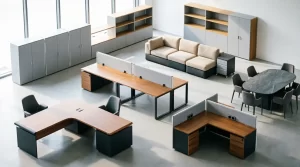
Modular furniture consists of individual components that can be assembled, rearranged, expanded, or reconfigured according to the requirements of a space.
Unlike permanently fixed furniture, modular systems provide greater flexibility. Businesses can change workstation configurations, add storage, expand seating capacity, or reorganize departments as their requirements change.
This makes modular solutions suitable for:
- Corporate offices
- IT companies
- Startups
- SMEs
- Coworking spaces
- Educational institutions
- Commercial offices
- Government workplaces
What Are the Different Types of Modular Furniture?
There are several categories of modular furniture designed for different workplace functions. The most common types include modular workstations, desks, storage systems, executive furniture, reception furniture, and conference room furniture.
Let’s explore the major categories in detail.
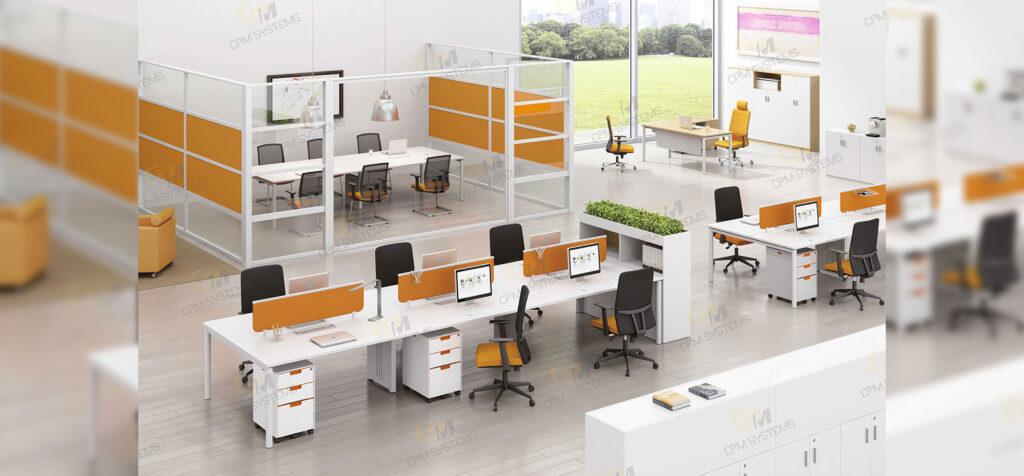
1. Modular Office Workstations
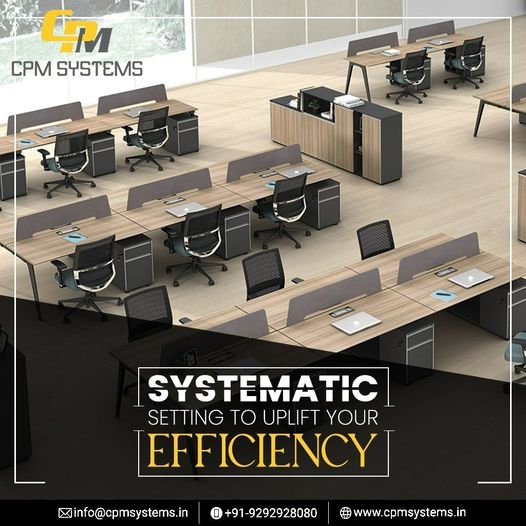
Modular office workstations are one of the most common types of modular office furniture used in modern workplaces.
They provide individual or shared working areas and can be configured according to the available floor space.
Common workstation configurations include:
- Straight workstations
- Back-to-back workstations
- L-shaped workstations
- Four-person workstations
- Six-person workstations
- Cluster workstations
- Team workstations
- Open-plan workstations
Benefits of Modular Office Workstations
Modular workstations can help businesses:
- Maximize floor-space utilization
- Create organized employee work areas
- Integrate cable management
- Add storage
- Improve workplace flexibility
- Reconfigure layouts when teams grow
For this reason, types of modular office workstations are often selected according to the number of employees, department requirements, and office layout.
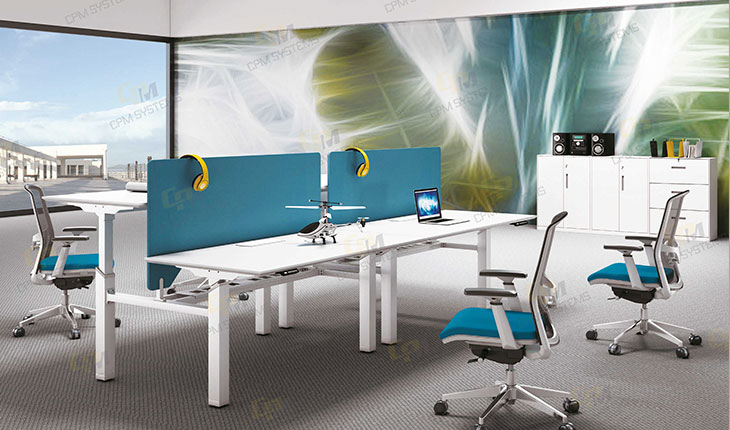
2. Modular Desks
Modular desks are flexible desk systems designed for individual employees, managers, or collaborative workspaces.
They can be integrated with:
- Pedestals
- Storage units
- Partitions
- Cable management
- Side extensions
- Return units
Different desk sizes and configurations allow businesses to create customized working areas without completely redesigning the office.
3. Modular Office Storage Furniture
Storage is an essential part of an organized workplace. Modular storage furniture allows businesses to create storage solutions according to their document, equipment, and office-supply requirements.
Common options include:
- Filing cabinets
- Mobile pedestals
- Storage cupboards
- Bookshelves
- Overhead cabinets
- Under-desk storage
- Open shelving
- Full-height storage units
Modular Office Storage Solutions
Modular office storage solutions can be integrated with workstations or installed separately depending on the office layout.
These systems are particularly useful for HR, finance, administration, legal, and other departments that handle documents and files regularly.
4. Modular Office Desks
Modern office desks are available in different shapes, sizes, and configurations. Modular desk systems can be customized according to employee requirements and available space.
They may be used for:
- Employee workstations
- Manager cabins
- Administrative offices
- Reception areas
- Collaborative workspaces
The right desk should provide sufficient working space, legroom, storage, and technology integration.
5. Executive Office Furniture
Executive office furniture is designed for directors, senior managers, and leadership teams.
A typical executive setup may include:
- Executive desk
- Executive chair
- Side table
- Visitor chairs
- Storage cabinet
- Bookshelf
- Meeting table
Executive furniture generally focuses on professional appearance, comfort, functionality, and adequate working space.
6. Modular Reception Furniture
The reception area is the first point of interaction between a company and its visitors. Therefore, reception furniture should combine functionality with a professional appearance.
Reception furniture can include:
- Reception desks
- Reception counters
- Visitor chairs
- Side tables
- Storage units
- Decorative partitions
Modular reception systems can be customized according to the reception area’s size and interior design.
7. Modular Conference Tables
Meeting and conference areas require furniture that supports communication, presentations, discussions, and collaboration.
Conference tables are available in different shapes and configurations, including:
- Rectangular tables
- Boat-shaped tables
- Modular meeting tables
- Round tables
- Oval tables
- U-shaped configurations
The size and shape should be selected according to room dimensions and the expected number of participants.
8. Modular Collaborative Furniture
Modern workplaces increasingly include collaborative areas where employees can meet informally and work together.
Furniture for these spaces may include:
- Collaborative tables
- Meeting tables
- Shared desks
- Lounge seating
- Mobile tables
- Flexible chairs
These solutions can support brainstorming, team meetings, informal discussions, and project-based work.
9. Modular Partition Systems
Partitions help divide office areas without creating permanent walls. They can be used to provide privacy, define departments, and organize workstations.
Common options include:
- Solid partitions
- Glass partitions
- Half-height partitions
- Fabric partitions
- Acoustic partitions
- Desk-mounted screens
Modular partitions can often be rearranged when the office layout changes.
10. Modular Seating
Office seating is another important category of modular workplace furniture.
Depending on the application, businesses may require:
- Ergonomic office chairs
- Executive chairs
- Visitor chairs
- Conference chairs
- Waiting-area seating
- Collaborative seating
Comfort, ergonomics, durability, and design should be considered when selecting seating.
Different Types of Modular Office Furniture by Workplace Area
The different types of modular office furniture can also be categorized according to the area where they are used.
Employee Work Areas
Employee areas may use:
- Modular office workstations
- Modular desks
- Office chairs
- Pedestals
- Storage units
Management Areas
Management spaces may include:
- Executive office furniture
- Executive desks
- Executive chairs
- Storage cabinets
- Visitor seating
Meeting Areas
Meeting spaces can include:
- Conference tables
- Conference chairs
- Presentation units
- Storage
- Technology integration
Reception Areas
Reception spaces may require:
- Reception desks
- Visitor seating
- Storage
- Side tables
Collaboration Areas
Collaboration zones can use:
- Shared tables
- Modular desks
- Flexible seating
- Meeting furniture
Modular Furniture for Modern Offices
Modular furniture for modern offices should combine flexibility, functionality, ergonomics, technology integration, and professional design.
Modern offices often require furniture that can accommodate computers, monitors, networking equipment, storage, and changing employee requirements.
Features such as cable management, integrated power access, flexible partitions, and modular storage can make workplace furniture more practical.
Modular Furniture for Corporate Offices
Modular furniture for corporate offices is commonly used to create organized workspaces for large teams and multiple departments.
Corporate environments may require a combination of:
- Modular workstations
- Manager workstations
- Executive office furniture
- Conference tables
- Storage solutions
- Reception furniture
- Collaborative furniture
A coordinated modular system can help maintain a consistent appearance across different departments.
Modular Furniture for Startups and SMEs
Modular furniture for startups and SMEs is particularly useful because growing businesses may need to change their office layout frequently.
Modular systems allow companies to:
- Add new workstations
- Reconfigure existing layouts
- Increase seating capacity
- Add storage
- Create new meeting areas
This flexibility can make modular furniture a practical option for businesses planning future expansion.
Customized Modular Office Furniture
Every workplace has different dimensions, employee requirements, design preferences, and operational needs. Therefore, customized modular office furniture can be a useful solution for businesses that need furniture designed around their specific space.
Customization can include:
- Workstation dimensions
- Desk configurations
- Materials
- Laminates
- Colors and finishes
- Partition heights
- Storage requirements
- Cable management
- Seating arrangements
Customized solutions can help businesses achieve better space utilization while maintaining a consistent office design.
How to Choose the Best Modular Furniture for Office?
When selecting the best modular furniture for office requirements, businesses should consider several factors.
1. Measure the Available Space
Accurate measurements help determine the appropriate furniture dimensions and workstation configuration.
2. Understand Employee Requirements
Different departments may need different workstation sizes, storage, privacy, and technology integration.
3. Consider Ergonomics
Furniture should provide comfortable working conditions, appropriate desk heights, sufficient legroom, and ergonomic seating.
4. Plan Storage
Determine how many documents, files, office supplies, and equipment need to be stored.
5. Consider Technology
Modern furniture should accommodate computers, monitors, power connections, and networking requirements.
6. Plan for Future Growth
Select modular systems that can be expanded or rearranged as employee numbers and business requirements change.
7. Evaluate Quality
Consider the quality of boards, frames, hardware, finishes, chairs, and other components before purchasing.
Modular Furniture Manufacturers in India
Businesses searching for modular furniture manufacturers in India should evaluate manufacturing capability, customization options, material quality, product range, project experience, installation support, and after-sales service.
A professional manufacturer should be able to understand the workplace requirement and recommend suitable furniture based on:
- Office size
- Employee strength
- Department requirements
- Budget
- Design preferences
- Future expansion
Modular Office Furniture Manufacturers in India
When looking for modular office furniture manufacturers in India, businesses should compare manufacturers based on complete project capabilities rather than price alone.
Important factors include:
- Manufacturing infrastructure
- Product quality
- Customization
- Workplace planning
- Delivery
- Installation
- Warranty
- After-sales support
Choosing an experienced manufacturer can help businesses coordinate different furniture categories under one complete workplace project.
Why Choose a Professional Modular Furniture Manufacturer?
A professional manufacturer can provide more than individual furniture products. It can help businesses create a complete workplace solution.
The process may include:
- Understanding the requirement
- Measuring the available space
- Preparing furniture layouts
- Selecting materials and finishes
- Customizing furniture
- Manufacturing
- Quality checking
- Delivery
- Installation
- After-sales support
This integrated approach can make office furniture projects easier to manage.
CPM Systems for Modular Office Furniture
CPM Systems provides workplace furniture solutions for businesses looking for functional, modern, and flexible office environments.
The product range includes modular office furniture, modular office workstations, modular desks, office desks, executive office furniture, office storage solutions, reception furniture, conference tables, seating, and customized modular office furniture.
The solutions can be adapted for corporate offices, IT companies, startups, SMEs, coworking spaces, and other commercial workplaces.
For businesses searching for modular office furniture manufacturers in India, CPM Systems focuses on combining practical design, functionality, customization, and workplace requirements.
Conclusion
There are many different types of modular furniture, and each type serves a specific purpose within a modern workplace. From modular office workstations and modular desks to storage systems, executive furniture, reception furniture, conference tables, partitions, and collaborative furniture, businesses can create a complete office environment using flexible modular solutions.
The right furniture should be selected according to office size, employee requirements, department functions, ergonomics, technology needs, storage requirements, and future growth.
Whether you are planning modular furniture for modern offices, modular furniture for corporate offices, or modular furniture for startups and SMEs, customization and professional planning can help maximize the value of your workplace investment.
CPM Systems provides customized modular workplace solutions designed to help businesses create organized, comfortable, productive, and professional offices.