How to Select Conference Tables & Office Furniture? Complete Guide
Choosing the right conference tables and office furniture is an important part of creating a productive, comfortable, and professional workplace. The right furniture not only improves the appearance of an office but also supports employee collaboration, meetings, productivity, and day-to-day operations.
Whether you are setting up a startup office, expanding a corporate workplace, or renovating an existing workspace, selecting the right office conference table and other furniture requires careful consideration of office size, seating capacity, functionality, design, durability, and budget.
This guide explains how to select the best conference tables & office furniture for different types of workplaces.
Why Is Choosing the Right Office Furniture Important?
Office furniture has a direct impact on workplace comfort and productivity. Employees spend several hours at their desks, while conference rooms are frequently used for meetings, presentations, discussions, and client interactions.
Good-quality modern office furniture can help create an organized and professional environment. Similarly, a properly selected conference table can make meetings more comfortable and encourage better communication between team members.
For businesses, furniture should therefore be considered a long-term investment rather than simply an office decoration.
1. Consider Your Office Size
The first step when selecting conference tables and office furniture is to measure the available space.
A conference table should fit comfortably inside the meeting room while leaving enough space around it for chairs and movement.
For smaller meeting rooms, compact rectangular, square, or round conference tables can be suitable. Larger meeting rooms can accommodate bigger rectangular, boat-shaped, or modular conference tables.
Before purchasing an office conference table, consider:
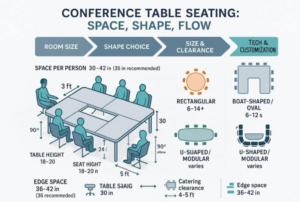
- Meeting room dimensions
- Number of seats required
- Door and entrance positions
- Walking space around the table
- Position of screens and presentation equipment
- Storage requirements
- Power and cable-management requirements
Avoid selecting a table simply because it looks attractive. The furniture must fit the room properly.
2. Choose the Right Conference Table Size
The size of the table should be based primarily on the number of people who will regularly use the meeting room.
A small conference room may require a table for 4–6 people, while medium-sized rooms may need seating for 6–10 people. Large corporate meeting rooms may require tables that accommodate 10–20 or more participants.
The table should provide sufficient personal space for laptops, documents, notebooks, and other meeting essentials.
When choosing the best conference tables for offices, always balance seating capacity with available floor space.
3. Select the Right Conference Table Shape
Conference tables are available in several shapes, and each has different advantages.
Rectangular Conference Tables
Rectangular tables are among the most commonly used options for corporate offices. They provide clear seating arrangements and work well in medium and large meeting rooms.
Boat-Shaped Conference Tables
Boat-shaped tables provide additional space in the centre while offering comfortable seating along the sides. They are suitable for premium corporate conference rooms.
Round Conference Tables
Round tables are useful for smaller meeting rooms and informal discussions. They create a more equal seating arrangement and encourage communication.
Modular Conference Tables
Modular tables are useful for organizations that frequently change their workspace requirements. They can be rearranged according to different meeting formats.
4. Focus on Comfort and Ergonomics
Comfort should be one of the most important considerations when selecting office furniture selection.
Conference meetings can sometimes last several hours. Uncomfortable chairs or poorly designed tables can cause fatigue and reduce concentration.
Look for:
- Comfortable conference chairs
- Proper table height
- Adequate legroom
- Appropriate seating space
- Rounded or comfortable table edges
- Good-quality materials
- Proper workstation ergonomics
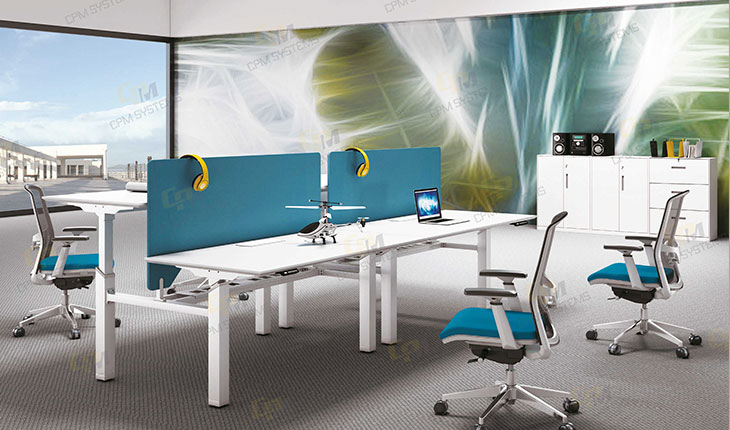
For everyday work areas, ergonomic workstations and chairs are equally important.
5. Match Furniture With Your Office Design
Your furniture should complement the overall interior design of your workplace.
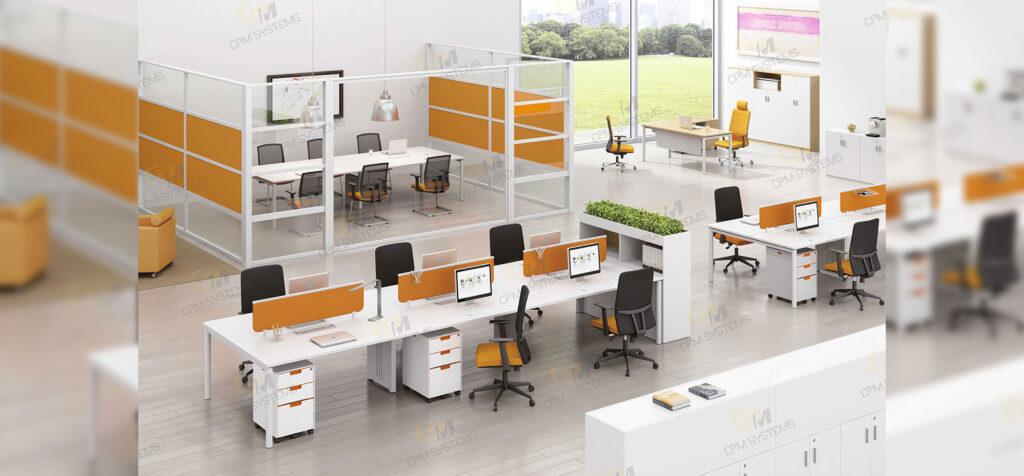
Modern organizations often prefer clean, minimal, and functional furniture designs. Traditional corporate offices may prefer premium wooden finishes, while technology companies may choose contemporary designs with modular elements.
When selecting modern office furniture, consider:
- Office colour scheme
- Flooring
- Lighting
- Wall finishes
- Branding
- Reception design
- Conference room design
- Executive cabin interiors
A consistent furniture style creates a more professional and visually appealing workplace.
6. Select Durable Materials
Office furniture is used every working day, so durability is essential.
For conference tables, commonly used materials include engineered wood, laminate finishes, veneer, glass, metal, and combinations of different materials.
The best choice depends on the office environment, expected usage, design requirements, and budget.
For high-traffic corporate workplaces, prioritize furniture that is:
- Strong and stable
- Scratch resistant
- Easy to clean
- Moisture resistant where required
- Easy to maintain
- Designed for long-term use
Working with reliable office furniture manufacturers can help businesses obtain furniture designed specifically for commercial environments.
7. Consider Technology and Cable Management
Modern conference rooms are technology-driven. Video conferencing, laptops, displays, projectors, microphones, and charging devices are now common requirements.
Therefore, a conference table should not only look good but also support technology integration.
Look for features such as:
- Built-in power sockets
- USB charging ports
- Cable-management systems
- Floor-box compatibility
- Data connectivity
- Video-conferencing integration
A well-designed conference table can keep cables organized and make the meeting room look cleaner.
8. Think About Storage Requirements
Office furniture is not limited to desks and chairs.
A complete office may require:
- Pedestal storage
- Filing cabinets
- Storage cupboards
- Bookshelves
- Credenzas
- Reception counters
- Display units
- Lockers
When planning corporate office furniture, storage should be integrated into the workplace design wherever possible.
Proper storage helps reduce clutter and creates a more organized office.
9. Choose Furniture According to Your Office Type
Different businesses have different furniture requirements.
Startups
Startups often need flexible and cost-effective furniture. Modular workstations and collaborative furniture can provide flexibility as the company grows.
Corporate Offices
Corporate workplaces generally require a combination of workstations, executive desks, conference tables, reception furniture, storage, and meeting-room furniture.
IT and Technology Companies
Technology companies often benefit from flexible workstations, collaborative spaces, breakout areas, and modern meeting rooms.
Professional Offices
Law firms, consulting companies, financial organizations, and other professional businesses may prefer premium executive desks, conference tables, and sophisticated office interiors.
10. Don’t Ignore Your Budget
Budget plays an important role when selecting office furniture.
However, choosing the cheapest furniture may not always be the most economical decision. Low-quality furniture can require frequent repairs or replacement.
Instead, evaluate furniture based on:
Quality + Durability + Design + Functionality + Total Cost of Ownership
A slightly higher initial investment in durable furniture can provide better long-term value.
11. Buy From Reliable Office Furniture Manufacturers
Choosing the right supplier is as important as choosing the furniture itself.
Reliable office furniture manufacturers can provide customized solutions according to office dimensions, seating requirements, brand guidelines, and project specifications.
Before selecting a manufacturer, check:
- Product quality
- Manufacturing capabilities
- Customization options
- Installation support
- Warranty
- Project experience
- Delivery timelines
- After-sales service
For large corporate projects, it is particularly important to work with a manufacturer that can manage bulk production and installation efficiently.
12. Consider Customization
Every office has different requirements. Standard furniture may not always fit perfectly into a specific workspace.
Customized conference tables & office furniture can be designed according to:
- Room dimensions
- Seating capacity
- Brand identity
- Colour requirements
- Material preferences
- Storage needs
- Technology integration
- Workspace layout
Customization is particularly useful for large corporate offices, headquarters, hotels, educational institutions, and commercial projects.
13. Think About Future Expansion
Your office may grow over time, so furniture planning should consider future requirements.
Modular furniture can make it easier to add workstations, storage, meeting tables, and other elements as the organization expands.
A flexible furniture system can reduce the need for complete office redesigns in the future.
14. Create a Complete Office Furniture Plan
Instead of selecting individual products separately, consider planning the entire workplace as one system.
A complete office furniture plan may include:
- Reception furniture
- Workstations
- Executive desks
- Conference tables
- Conference chairs
- Storage
- Office chairs
- Collaboration furniture
- Breakout furniture
- Meeting-room furniture
This approach helps maintain design consistency and can simplify procurement and installation.
Conference Tables & Office Furniture: Final Checklist
Before finalizing your furniture, ask the following questions:
- Does the furniture fit the available space?
- Is the conference table suitable for the required number of people?
- Is there enough movement space?
- Are the chairs comfortable?
- Does the design match the office interior?
- Are the materials durable?
- Is cable management included?
- Is sufficient storage available?
- Does the furniture meet the budget?
- Can the furniture be customized?
- Can the supplier handle installation?
- Is the furniture suitable for future expansion?
Conclusion
Selecting the right conference tables and office furniture requires more than choosing attractive designs. Businesses should consider space, functionality, comfort, durability, technology integration, storage, design, customization, and budget before making a decision.
The right office conference table can improve meeting-room functionality, while high-quality modern office furniture can create a productive and professional workplace.
For organizations planning a new office, expansion, or renovation, working with experienced office furniture manufacturers can make the entire process easier—from furniture selection and customization to manufacturing, delivery, and installation.
With the right planning, businesses can create a workplace that is comfortable, functional, professional, and ready to support future growth.