Office Furniture for Small Offices: Smart Space-Saving Ideas
Setting up a small office requires careful planning. Limited floor space does not mean you have to compromise on comfort, functionality, or professional appearance. With the right office furniture for small offices, even a compact workspace can become organized, productive, and visually appealing.
The key is to select furniture that uses available space efficiently while providing employees with comfortable and practical work areas. Modular workstations, compact desks, smart storage, and flexible furniture solutions can help small businesses create an efficient workplace.
Why Is the Right Office Furniture Important for Small Offices?
In a small office, every square foot matters. Oversized desks, unnecessary storage units, and poorly planned furniture can make the workspace feel crowded.
The right furniture can help you:
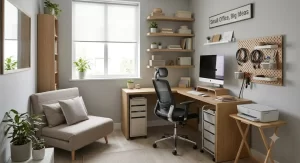
- Maximize available floor space
- Create comfortable workstations
- Improve employee movement
- Maintain an organized workspace
- Provide adequate storage
- Create a professional office environment
- Allow future office expansion
A well-designed office should balance space utilization, employee comfort, functionality, and aesthetics.
1. Choose Compact Modular Workstations
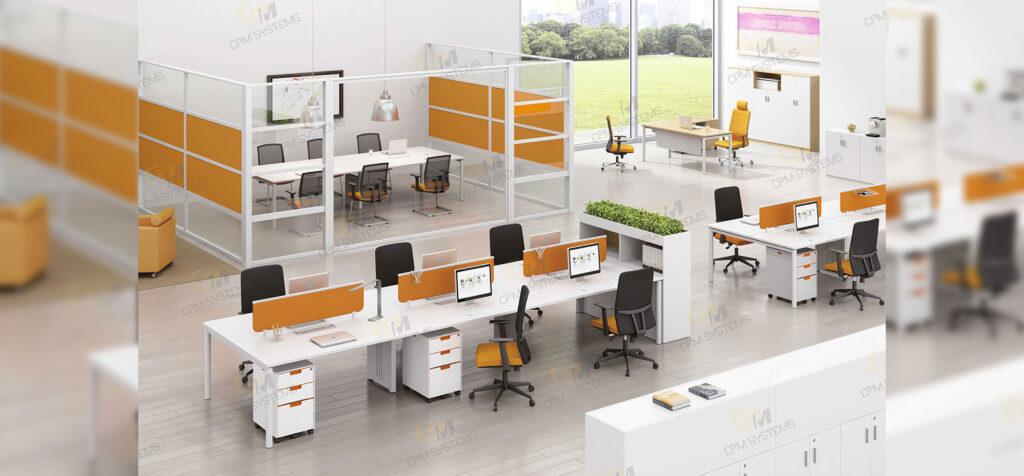
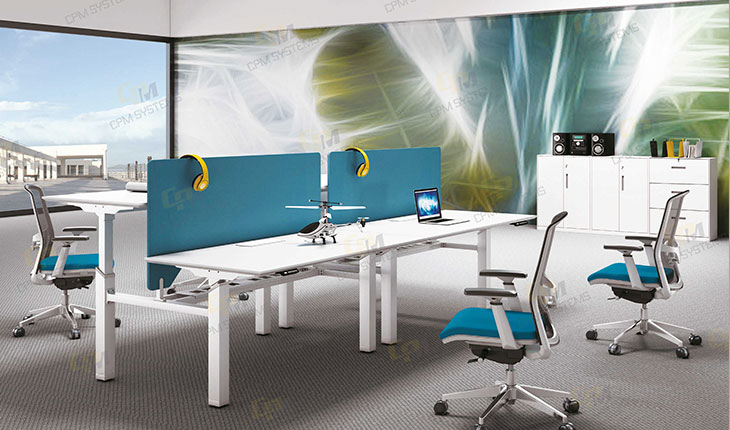
Modular workstations are one of the most practical options for small offices. They can be configured according to the available floor area and employee requirements.
Depending on the office layout, you can choose:
- Single workstations
- Linear workstations
- Back-to-back workstations
- Two-seater workstations
- Compact cluster workstations
- L-shaped workstations
Modular systems can also be reconfigured when your business grows, making them a flexible long-term solution.
2. Use Space-Efficient Office Desks
Large traditional desks can quickly consume valuable floor space. Small offices should consider desks designed specifically for compact environments.
Choose desks with:
- Practical dimensions
- Built-in cable management
- Integrated storage
- Minimal structural footprint
- Durable surfaces
A compact desk can provide sufficient working space without unnecessarily reducing circulation areas.
3. Select Ergonomic Office Chairs
Saving space should never mean compromising employee comfort.
Employees may spend several hours working at their desks, so chairs should provide appropriate back support and comfortable seating.
When selecting office chairs, consider:
- Back support
- Seat comfort
- Adjustable features
- Appropriate height
- Mobility
- Compatibility with workstation height
Ergonomics should remain an important part of small-office furniture planning.
4. Use Smart Storage Solutions
Storage can become a major challenge in a compact office.
Instead of using large standalone cabinets, consider space-efficient solutions such as:
- Mobile pedestals
- Under-desk storage
- Vertical cabinets
- Wall-mounted shelves
- Compact filing units
- Overhead storage
Using vertical space can help increase storage capacity without occupying too much floor area.
5. Consider Multi-Functional Furniture
Furniture that serves more than one purpose can be especially useful in small offices.
For example, a meeting table can also be used as a collaborative workspace. Storage units can sometimes function as space dividers, while modular desks can be rearranged when required.
Multi-functional furniture allows businesses to get greater value from limited office space.
6. Plan the Office Layout Before Buying Furniture
One of the biggest mistakes small businesses make is purchasing furniture before planning the layout.
Before ordering furniture, prepare a basic floor plan showing:
- Workstations
- Employee seating
- Doors
- Windows
- Walkways
- Storage
- Reception
- Meeting area
- Electrical points
Planning the layout first helps you determine the appropriate furniture sizes and configurations.
7. Create an Efficient Workstation Arrangement
The workstation arrangement should depend on the number of employees and their working style.
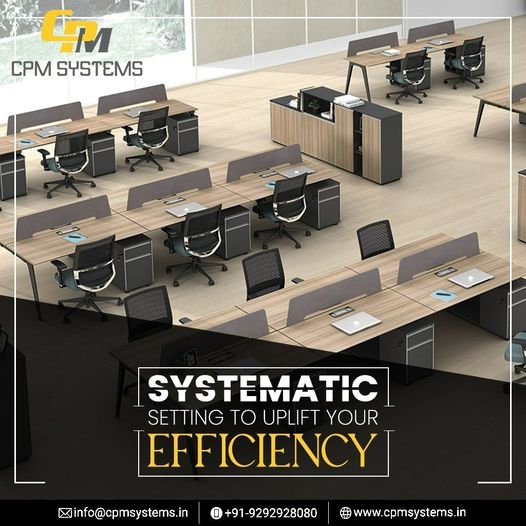
For example, back-to-back or cluster workstation configurations can accommodate multiple employees within a relatively compact area. Modular workstation systems are available in several layouts, including linear, cluster, back-to-back, and L-shaped configurations.
For small teams, a simple arrangement can provide both efficient space utilization and easy communication.
8. Keep Walkways Clear
A small office can quickly feel uncomfortable if furniture blocks movement.
Maintain clear pathways between:
- Workstations
- Entrance
- Meeting areas
- Storage
- Pantry
- Common areas
Avoid placing unnecessary furniture in circulation areas.
A clean layout makes the office feel more spacious and easier to navigate.
9. Use Glass or Open Partitions Where Appropriate
Traditional solid partitions can make a small office feel smaller.
Where privacy requirements allow, glass or visually lighter partitions can help maintain an open appearance while creating separate work zones.
Partitions can be used for:
- Manager areas
- Meeting rooms
- Reception
- Small cabins
- Focus areas
The choice should depend on privacy, acoustics, lighting, and workplace requirements.
10. Plan Cable Management
Computers, monitors, chargers, networking equipment, and other devices can create cable clutter.
Modern modular workstations can incorporate cable trays and routing systems to keep wires organized and out of sight.
Good cable management can make a small office look cleaner and more professional.
11. Choose Light and Professional Finishes
Furniture colours and finishes can influence how a small office feels.
Lighter and coordinated finishes can create an open and organized visual appearance. However, the final selection should also match your company’s branding and interior design.
Maintain consistency across:
- Workstations
- Desks
- Storage
- Reception furniture
- Meeting tables
A consistent furniture style creates a more professional workplace.
12. Plan a Small Meeting Area
Even a small office may need a dedicated meeting space.
Instead of allocating a large room, consider a compact meeting table with appropriate seating.
Depending on the available space, you can create:
- Two-to-four-person meeting areas
- Small discussion zones
- Flexible collaborative spaces
- Compact conference areas
Furniture should be selected according to the actual meeting requirements rather than simply following a traditional office layout.
13. Plan for Future Growth
Small businesses often grow quickly. Your furniture should therefore be flexible enough to accommodate additional employees.
Modular furniture makes it easier to add or rearrange workstations as team sizes and organizational requirements change.
Planning for future growth can prevent the need to replace an entire furniture setup when the business expands.
How to Choose Office Furniture for a Small Office
Before purchasing furniture, consider the following factors:
Space
Measure the office carefully and identify the usable floor area.
Employee Requirements
Understand how many employees will use the space and what type of work they perform.
Furniture Dimensions
Choose furniture that provides sufficient working space without overcrowding the office.
Ergonomics
Prioritize comfortable workstations and chairs.
Storage
Use compact and vertical storage solutions where possible.
Flexibility
Select modular furniture that can be rearranged or expanded.
Durability
Choose materials and hardware suitable for regular office use.
Budget
Compare quality, functionality, warranty, installation, and long-term value rather than focusing only on the initial price.
CPM Systems for Small Office Furniture Solutions
CPM Systems provides modern office furniture solutions designed for businesses with different workspace requirements. Its range includes modular workstations, office desks, storage solutions, executive furniture, conference tables, and other workplace furniture.
For small offices, the focus can be on creating practical layouts that maximize available space while maintaining comfort and a professional appearance.
As India’s leading office furniture brand, CPM Systems focuses on combining functional design, modular solutions, and workplace requirements to help businesses create efficient office environments.
Benefits of Modular Furniture for Small Offices
Modular furniture can offer several advantages for compact workplaces:
Space Efficiency
Furniture can be configured according to the available floor area.
Flexibility
Workstations can be rearranged when office requirements change.
Scalability
Additional modules can be added as the business grows.
Professional Appearance
Matching furniture creates a more organized and modern workplace.
Better Organization
Integrated storage and cable management help reduce clutter.
Long-Term Value
Flexible furniture can continue to adapt as business requirements change.
Common Mistakes to Avoid in a Small Office
Avoid these common mistakes when selecting office furniture:
- Buying oversized desks
- Ignoring office measurements
- Overcrowding the workspace
- Not planning storage
- Ignoring cable management
- Choosing furniture only for appearance
- Compromising on ergonomics
- Blocking natural light
- Forgetting employee movement
- Not considering future expansion
Careful planning can help you make the most of every available square foot.
Conclusion
Choosing the right office furniture for small offices requires a balance between functionality, comfort, design, and efficient space utilization.
Compact modular workstations, ergonomic chairs, smart storage, flexible meeting furniture, and effective cable management can transform a limited workspace into a productive and professional office.
The best approach is to plan your office layout before purchasing furniture and select solutions that can adapt as your business grows.
For businesses looking for practical and modern workspace solutions, CPM Systems offers modular office furniture and workstation solutions designed to support different office environments and requirements.
Frequently Asked Questions
What is the best furniture for a small office?
Compact modular workstations, ergonomic chairs, space-efficient desks, mobile pedestals, vertical storage, and flexible meeting furniture are suitable options for small offices.
Are modular workstations suitable for small offices?
Yes. Modular workstations can be configured according to available space and can provide efficient seating while allowing future reconfiguration.
How can I maximize space in a small office?
Use compact furniture, modular workstations, vertical storage, multi-functional furniture, organized cable management, and a carefully planned floor layout.
Should small offices use large executive desks?
Large executive desks may not be suitable for every small office. Compact executive desks can provide the required functionality while using less floor space.
How important is storage in a small office?
Storage is extremely important because clutter can quickly reduce usable workspace. Compact pedestals, vertical cabinets, and integrated storage can help keep the office organized.
Can modular office furniture be expanded later?
Yes. One of the main advantages of modular furniture is that it can often be rearranged, reconfigured, or expanded according to changing business requirements.